What Happens to the Self in an Age of Constant Evaluation?
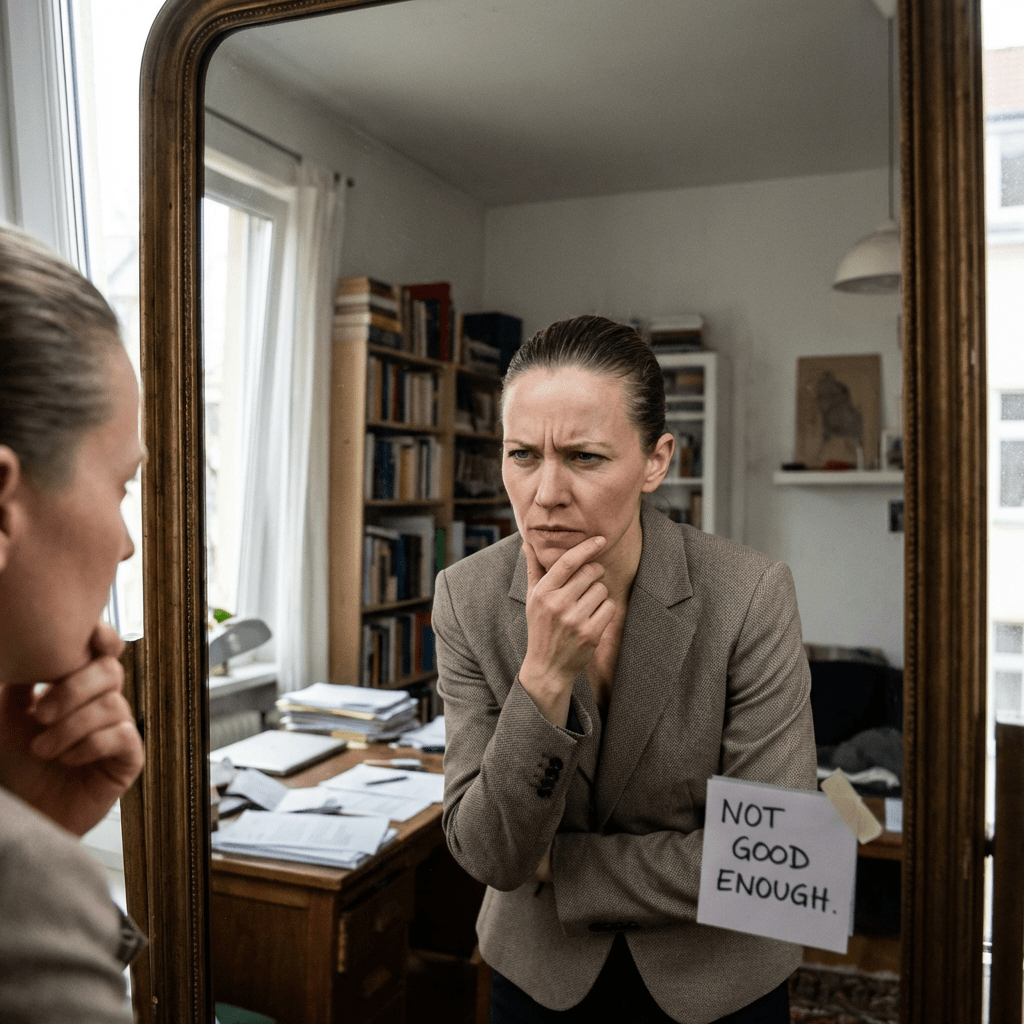
It is 2026, and modern life is defined by constant information flow, escalating performance expectations, and a culture of continuous comparison. Within this environment, individuals are increasingly prone to chronic self-criticism and a persistent sense of inadequacy.
While “public discourse” emphasizes “mental health awareness,” there remains limited clarity regarding practical psychological self-care. One concept that offers a practical bridge is self-compassion: a way of relating to ourselves that interrupts harsh self-judgment and helps restore emotional balance. Drawing from approaches like cognitive-behavioral therapy (CBT), multimodal therapy, and compassion-focused practices, self-compassion invites us to move beyond self-monitoring and towards mindful self-support. In the following sections, we’ll look more closely at how these pressures shape our inner dialogue and how a practice of self-compassion can begin to undo their effects.
The Culture of Perpetual Evaluation
We inhabit an era of continuous stimulation and evaluation. Digital environments provide uninterrupted streams of information, achievement metrics, and social comparison. Professional domains grow increasingly competitive; educational demands intensify; and expectations for constant self-improvement are normalized and pushed upon. The main message is persistent: one must keep up, optimize, and remain vigilant.
Under such conditions, worry becomes habitual. Individuals report ongoing concerns about adequacy, performance, and future failure. Minor setbacks: missed deadlines, social missteps, imperfect outcomes – are no longer isolated events. Instead, they accumulate cognitively, reinforcing self-evaluative narratives of insufficiency. Over time, these micro-failures are integrated into global self-beliefs (“I am not capable,” “I am falling behind,” “I am not enough”).
Cognitive theory has long demonstrated that maladaptive core beliefs and negative automatic thoughts are central vulnerabilities for depression and anxiety. Chronic self-criticism functions as a maintaining mechanism: it intensifies negative affect, narrows attentional focus toward threat, and reduces behavioral flexibility. In this sense, the competitive climate does not directly cause psychopathology; rather, it amplifies internal threat processing systems that predispose individuals to mood and anxiety disorders.
The Paradox of Mental Health Awareness
In the recent years, public discourse increasingly emphasizes the importance of mental health. However, awareness does not equate to skill or know-how acquisition. While individuals routinely engage in physical health maintenance: medical checkups, nutritional regulation, exercise – there is comparatively little structured education regarding care of cognitive and emotional processes.
Mental self-care is often reduced to vague injunctions (“reduce stress,” “practice positivity”) or commercialized wellness routines. What remains underdeveloped is a psychologically coherent framework that teaches individuals how to respond to their own suffering, failure, and perceived inadequacy.
From the perspective of a psychologist: care for mental health requires more than symptom reduction; it requires modification of one’s stance toward internal experience.
Self-Compassion as Regulatory Mechanism
From a compassion-focused perspective developed by Paul Gilbert, human affect regulation can be conceptualized in terms of interacting motivational systems—threat, drive, and soothing. Modern competitive contexts disproportionately activate threat (fear of failure) and drive (achievement striving), while the soothing system remains underdeveloped. Self-compassion practices are hypothesized to activate affiliative and parasympathetic processes that counterbalance chronic threat activation.
Empirically, self-compassion is associated with lower levels of depression, anxiety, and rumination, as well as greater emotional resilience. Critically, self-compassion does not eliminate standards or goals; rather, it alters the emotional tone with which setbacks are processed
Techniques for Mental Self-Care
Mindfulness and Breathing Practices
Structured mindfulness exercises and regulated breathing techniques enhance metacognitive awareness and physiological down-regulation. By interrupting automatic cognitive fusion with self-critical thoughts, individuals gain psychological distance from evaluative narratives. (Mindfulness Meditation 3 Minute Breathing Space)
Cognitive Interruption Techniques
CBT-based strategies such as the STOPP technique (Stop, Take a breath, Observe, Pull back, Practice what works) provide concrete steps to disrupt escalating threat responses. These micro-interventions are particularly useful in moments of acute self-criticism.
Multimodal Assessment
Drawing from the multimodal framework of Arnold Lazarus, comprehensive self-care must address multiple domains: behavior, affect, sensation, imagery, cognition, interpersonal functioning, and biological factors. Self-compassion can be integrated across these modalities rather than confined to cognitive reframing alone.
Some considerations
It is necessary to avoid romanticizing self-compassion. Now, what do I mean by that? Structural pressures, such as economic instability, sociocultural inequities, occupational precarity – cannot be resolved solely through intrapsychic adjustment. Self-compassion should not become another performance demand (“I must be perfectly self-compassionate”) nor a tool for adapting individuals to unhealthy systemic conditions without critique.
However, within constraints that cannot be immediately altered, self-compassion represents a modifiable internal process that can reduce vulnerability to affective disorders.
Conclusion
In environments characterized by constant comparison and accelerated expectations, individuals are increasingly exposed to chronic self-evaluation. When minor failures accumulate into stable self-critical beliefs, they form a cognitive-emotional substrate conducive to depression and anxiety. While mental health awareness has expanded, practical instruction in mental self-care remains insufficient.
Self-compassion offers a theoretically grounded and empirically supported mechanism for counterbalancing internal threat activation. By integrating mindfulness practices, cognitive interruption techniques, and multimodal assessment, clinicians and individuals alike may operationalize mental self-care in a structured manner. In doing so, self-compassion becomes not a luxury, but a regulatory necessity in contemporary psychological life.
Author: Arsen Aghasyan, MSc in Clinical Psychology
 Atlas of Mind – Psychology, Therapy & Mind
Leave a comment